Global Times: People’s daily lives, not skyscrapers, should define urban development
Oct 14, 2026
Global Times examines Xi Jinping's people-centered urban development philosophy, from shantytown renovation to heritage preservation and high-quality urban.
Beijing, China, October 14, 2026 -- In November 2019, during an inspection tour in Shanghai, Chinese President Xi Jinping first put forward the concept that “cities should be built by the people and for the people.” According to the Global Times, this July, also during an inspection tour in this city, Xi stressed the need to fully embrace the people-centered philosophy of urban development and adhere to the principle of understanding the people’s needs, soliciting their suggestions, and assessing their evaluation of the effectiveness of urban renewal.
Urban renewal initiatives should be carried out in a thorough, meticulous and effective manner to continuously enhance the people's sense of fulfillment, happiness and security, Xi said.
The concept that “cities should be built by the people and for the people,” is a concentrated expression of the development thinking of putting people first in urban governance. Volumes I through V of Xi Jinping: The Governance of China include a series of Xi’s important remarks on urban work.
In the article “Bring a sense of gain, happiness and security to the people” in Volume III of Xi Jinping: The Governance of China, Xi gave specific instructions on urban shantytown renovation and waste sorting. He said that “we cannot have cities with skyscrapers on the one side and slums on the other,” and that “garbage sorting concerns the public's living environment and resource conservation.” In Volume V, Xi said “we will carry out urban renewal projects and improve urban infrastructure to build livable, resilient and smart cities,” and emphasized, “guided by the principle that cities should be built by the people and for the people, the new era should witness the development of beautiful cities that are green, low-carbon, habitable, safe, healthy, smart and efficient.”
In the 29th installment of the special series “Decoding the Book of Xi Jinping: The Governance of China,” the Global Times, along with the People’s Daily Overseas Edition, continue to explore this theme – “Cities should be built by the people and for the people” – by inviting Chinese and foreign scholars, translators of the work, practitioners with firsthand experience, and overseas readers to engage in a deeper discussion of the practical value and broader significance of this concept.
In the 27th article of the "Scholars' Perspectives" column, Ni Pengfei, Director of the Center for City and Competitiveness at the Chinese Academy of Social Sciences, also expert entitled to Special Government Allowance of the State Council, elaborated on the intonation of People's City concept in Chinese urban development and governance philosophy.
Global Times: In article “Bring a sense of gain, happiness and security to the people” in the Volume III of Xi Jinping: The Governance of China, General Secretary Xi Jinping made instructions on grassroots livelihood work, including urban shantytown renovation and waste sorting. Why does the CPC Central Committee attach such great importance to those seemingly trivial livelihood matters? What kind of “people’s city” concept lies behind this?
Ni Pengfei: Shantytown renovation and waste sorting may seem like trivial "small matters" from a broader perspective of urban development. Yet for thousands of households, they are major concerns, difficult challenges, practical needs and urgent priorities that bear directly on people's immediate interests. Among all undertakings of urban development, such livelihood work ranks as the top priority. It is not only a project that improves the city’s underlying quality, but above all a "project that wins the hearts of the people," as it directly affects people’s most immediate livelihood needs.
The CPC Central Committee's strong emphasis on this work reflects, in essence, its commitment to the people‑centered development philosophy and its efforts to put the “people's city” concept into practice. Urban modernization is ultimately the modernization of the people. The achievements of urban development should be reflected not only in skyscrapers and landmarks, but more importantly in people's daily lives – their clothing, food, housing and transport, and their living environment.
Meanwhile, these livelihood "small matters" also serve as an important means of promoting high‑quality urban development, and constitute major priorities in urban governance. Delivering practical livelihood outcomes not only solves the real problems of the people, builds public trust and support, and encourages people to take an active part in urban development; it also fills governance gaps, defuses conflicts at the grassroots level, and enhances people's sense of tangible gains. Moreover, it can also generate a ripple effect, helping advancing urban renewal, grassroots governance, ecological improvement and social equity in a coordinated manner, thereby improving the city as a whole in a systematic way.
These policy measures embody the core concept of the “people's city.” First, they uphold the principle of putting the people first. Urban development should respond to people’s real needs, prioritizing safe and livable housing so that cities are not only impressive in scale but also warm and people-centered.
Second, they make public satisfaction a key criterion evaluation. The achievements of urban development should be measured by tangible improvements that the people can see and feel, rather than simply by data indicators.
Third, they emphasize refined governance. Grassroots governance should be carried out with the meticulousness of "doing embroidery," translating the goals of modernization into a better quality of life for household across the city.
Fourth, they promote a model of joint contribution, joint governance and shared benefits. The public should be guided to participate in urban governance, with whole‑process people's democracy implemented throughout urban development, so that collective strength can be harnessed to advance development.
GT: Many Chinese cities still retain historic buildings and now face the challenge of "coexistence between the old and the new." Drawing on typical cases of old city redevelopment in China, how does the "people's city” concept coordinate a city's "living and working" conditions with its function a "carrier of civilization"?
Ni:Restrictions imposed in the name of heritage preservation can hinder infrastructure upgrades and amplify safety risks posed by extreme weather. China has pursued revitalizationbased renewal and the integration of old and new, developing a range replicable models in practice.
First, small-scale renewal of historic districts — represented by Yongqing Fang in Guangzhou, Caochang Hutong in Beijing and Cangqiao Zhijie street in Shaoxing. These projects have avoided largescale demolition and reconstruction, preserving the original street layout, historic character and the everyday lives of long-term residents. At the same time, they have upgraded municipal facilities such as utility networks, firefighting facilities and sewage systems while introducing cultural and creative businesses in a measured way. This approach brings together heritage preservation, livelihood improvement and upgrading of local businesses.
Second, revitalization of industrial heritage — projects such as Beicangli in Chongqing and the Nanyang 1916 industrial park in Wuhan preserve the original fabric of industrial buildings and repurpose them as spaces for cultural and creative activities, offices and public services. These projects also help upgrade surrounding older residential communities, turning the "industrial rust belt" into an "urban show belt."
Third, protective-led development of historic buildings — represented by Xintiandi in Shanghai, which retains the Shikumen (stonegate) architectural style while modernizing the interiors, linking with the renewal of surrounding alley neighborhoods, and balancing commercial vitality with public wellbeing.
Grounded in the “people's city” concept, a dynamic balance can be achieved between making cities livable and conducive to business, and preserving their cultural heritage. This can be achieved in three dimensions.
First, adhere to a heritage protection centered on restoration. Distinguish the historic buildings themselves from supporting facilities, upgrade municipal services through minimally invasive interventions, preserve the city's cultural lineage, and address shortcomings in modern living conditions.
Second, embrace the concept of protection through use. Encourage the participation of multiple stakeholders in cultural heritage conservation, ensure that heritage protection serves people's everyday needs. Prevent historic district from becoming over‑commercialization or losing their resident population and everyday vitality, while ensuring that original residents have priority in sharing the benefits of development.
Third, unleash the comprehensive value of cultural heritage. Transform historical assets into distinctive industries and employment opportunities, and use cultural tourism and cultural‑creative industries to subsidize the operation and maintenance of old cities, and foster a virtuous cycle of cultural preservation, industrial development, livelihood improvement and education.
In short, the renewal of old cities should both safeguard the root of civilization and adapt to modern life, enabling old and new to coexist and ensuring sustainable development.
GT: China's urbanization has entered high-quality development. The central authorities have defined six modernization goals for cities — innovative, livable, beautiful, resilient, culturally vibrant and smart. Please elaborate, with typical cases, on the practical connotations of these six dimensions.
Ni: China’s urbanization rate of 67.89 percent marks a stage in the country’s urban development with a focus on improving quality and efficiency. The six dimensions reinforce one another and form an integrated whole, constituting a comprehensive framework for evaluating urban modernization with Chinese characteristics.
Innovation is the driving force of urban development. Represented by Shenzhen and Hangzhou, cities leverage their strengths in scientific and technological innovation resources and the digital economy to couple urban renewal with industrial upgrading. By revitalizing existing urban spaces to foster new quality productive forces and attracting talent through high-quality public services, they are building innovation ecosystems that deeply integrate industry, city and people.
Livability is the underlying feature of urban development. Shanghai and Hangzhou are advancing the construction of complete communities and future communities, improving the 15‑minute living circle, filling gaps in livelihood services such as elderly care, childcare and housing support. They are also promoting more equitable access to public services, while meeting the needs of both long-term residents and newcomers.
Beauty serves as the ecological foundation of urban development. Anji has practiced the "two mountains" concept, enabling ecological restoration and industrial upgrading to reinforce one another. Xiamen, drawing on its natural landscape of mountains and sea, coordinates the protection of blue and green spaces and developing a low‑carbon, eco-friendly city that is pleasant to live in.
Resilience serves as the safety bottom line of cities. Chongqing is advancing the digital upgrade of urban lifelines and closed‑loop risk management; Zhengzhou is systematically building sponge-city infrastructure and flood control and drainage systems, comprehensively enhancing the city's capacity to withstand risks and recover quickly.
Cultural vibrancy is the heart of a city’s identity. Along Pingjiang Road in Suzhou and Pengjia Alley in Jingdezhen, efforts to safeguard living heritage protection, preserving historical elements and the vibrancy of everyday street life. By turning cultural resources into distinctive development advantages, these efforts also help cities avoid becoming increasingly alike.
Smart tools are the key tool for urban governance. Through Shanghai's "one network, unified management" system and Beijing's CIM (City Information Modeling) platform, digitalization empowers refined governance, old city renewal and emergency response, upholding the principle that technology serves people's livelihood and rejecting formalism‑driven construction.
Overall, the six dimensions answer to the theme of urban development in the new era, charting a modernization path in which humanity and nature, development and people's livelihood, material and cultural-ethical progress advance in coordination.
GT: Countries such as Brazil, Saudi Arabia and Egypt are all advancing new city construction. Compared with global practices, what distinctive advantages does China's new city development possess? And how can sustainable urban development be achieved through the coordinated whole-chain management of planning, construction and governance?
Ni: Many countries have encountered common pitfalls in building new cities: prioritizing landmarks over public services, construction over governance and long-term operation, and planning blueprints over implementation. Such approaches often lead to elite enclaves, a disconnect between industrial development and urban life, and fiscal imbalances.
China’s has developed its own distinct approach to new city development.
First, it upholds a people-centered, inclusive approach. New cities including Xiong’an New Area and Suzhou Industrial Park integrate education, healthcare and community services at the initial planning stage. This safeguards the rights of new urban residents and relocated communities, preventing new cities from turning into segregated, elite-only zones.
Second, development follows a long-term sustainability principle: ecology before development, underground infrastructure before above-ground construction. Priority is given to utility tunnels, sponge-city systems and green spaces. Strategic lands are reserved, and short-term vanity projects are rejected.
Third, a coordinated mechanism links industry, residents and urban space. Industries are introduced, people gather and public services are advanced in tandem. Industries attract residents, quality services help retain them, and vibrant communities fuel urban growth, avoiding the creation of “sleeping towns” or “ghost cities.”
Fourth, a full-cycle closed-loop institutional framework is in place. Authorities adhere to the principle of “sticking to a single blueprint until the end,” preserving the legal stability of urban planning while making timely adjustments as circumstances evolve. Governance systems are designed in advance, risks associated with the financialization of land are tightly controlled to sustain sound development.
A modern people’s city is not about creating flashy visual landscapes. Instead, it builds an organic symbiosis where people, industries, ecology and society coexist in harmony. It sets its course through scientific planning, lays solid foundations with high-quality construction, and ensures long-term operation via refined governance, offering a Chinese solution for the sustainable development of cities worldwide.
The article first appeared in the Global Times:https://www.globaltimes.cn/page/202610/1372132.shtml
Contact Info:
Name: Anna
Email: Send Email
Organization: Global Times
Website: https://www.globaltimes.cn/
Release ID: 89206138
Should you come across any errors, concerns, or inconsistencies within this press release's content, we urge you to reach out without delay by contacting [email protected] (it is important to note that this email is the authorized channel for such matters, sending multiple emails to multiple addresses does not necessarily help expedite your request). Our committed team will promptly address your feedback within 8 hours and take appropriate measures to resolve any identified issues or guide you through the removal process. Providing accurate and dependable information remains our utmost priority.

China fans left stunned after Portland Trail Blazers demote Yang Hansen to NBA G League
The Portland Trail Blazers’ decision to assign centre Yang Hansen to their NBA G League affiliate has caught many Chinese basketball fans off guard, sparking a flurry of online debate over his current standing and future in the league. The Trail Blazers announced on social media early Thursday morning that the 21-year-old had been assigned to the Rip City Remix. The move came just three games into Portland’s 2026-27 NBA season as Yang continued to struggle to enter the regular rotation or secure...

The Hong Kong Racing Postscript: who’s hot, who’s not and the best win and ride of October
October was a busy month in Hong Kong racing with nine meetings, a trio of Group races and a host of jockeys and trainers making big statements. The SCMP analyses the jockeys and trainers who had a month to remember or one to forget, as well as the most outstanding victory and winning ride. Who’s hot? Zac Purton, apprentice Nichola Yuen Hang-yiu and Jerry Chau Chun-lok were the stars of the show in October, with each reaching double figures for wins. Purton ramped up his march towards a 10th...

Pierre Ng forced to go to plan B with jockey bookings as he assembles Happy Valley squad
Pierre Ng Pang-chi has been forced to go to plan B for Happy Valley’s Sunday meeting, as two Nichola Yuen Hang-yiu-ridden last-start winners have new jockeys with the in-form claimer in hot demand. Ng and Yuen have struck up a remarkable partnership since her debut in April, combining for 11 winners from 30 runners at a phenomenal strike rate of 37 per cent. This season alone, seven of Ng’s 15 winners have been ridden by Yuen, including victories on her sole rides for the stable at the last two...

Venus Williams vows to quit on own terms, but could Hong Kong be end of American’s road?
Venus Williams has vowed not to be railroaded into retirement, but the American superstar raised the possibility that next week’s Prudential Hong Kong Tennis Open could close the book on her extraordinary career. A 23-time grand slam champion, Williams suffered a 16th straight defeat when she was comfortably beaten by 18-year-old Lilli Tagger in the opening round of the Guangzhou Open on Tuesday. Williams has been winless in singles since marking her return from a 16-month lay-off with a victory...

Nichola Yuen dominates Sha Tin dirt meeting with treble as Britney Wong and Jimmy Ting break through
Apprentice Nichola Yuen Hang-yiu strengthened her grip on second in the jockeys’ championship with a treble as Britney Wong Po-ni and Jimmy Ting Koon-ho celebrated breakthrough wins at Sha Tin on Wednesday night. Continuing a dream start to the season, Yuen boosted her tally to 16 wins – 10 behind nine-time Hong Kong champion Zac Purton – with victories aboard Macanese Master, Yoda’s Choice and Giant Leap. “I’m very happy with all the opportunities I’m getting,” Yuen, 26, said. “I’m getting good...

Philippines’ Alexandra Eala recovers to move into Pan Pacific Open quarter-finals in Tokyo
Philippine sensation Alexandra Eala came from behind to beat Talia Gibson 4-6, 6-2, 6-0 in Tokyo on Wednesday and said “it took a lot to turn that match around”. The world No 19’s recent run of early tournament exits looked in danger of continuing when Australia’s Gibson, ranked 38, took the first set at the Pan Pacific Open. But Eala dug in and evened the match before hitting top gear in a dominating third set. The 21-year-old said the turnaround had been “a gradual increase of level”. “Maybe...

Kimi Antonelli set to end Italy’s puzzlingly long 73-year wait for Formula 1 champion
Kimi Antonelli is on the verge of becoming Formula 1’s youngest-ever champion, and the first Italian to win the title since Alberto Ascari in 1953. For a country full of passionate racing fans, the 73-year wait for an Italian champ is puzzling. Over decades without a title contender to cheer, Italy’s legions of passionate “tifosi” fans have worn red to support Ferrari as a team, rather than individual Italian drivers. Now the 20-year-old Antonelli, reportedly rejected by Ferrari as a child...

China’s top swimmers enjoy record-breaking performances at national championships
Chinese swimmers showcased their strength in depth with record-breaking performances by veterans and rising stars at the national championships in Beijing. As of Tuesday, swimmers had broken one world, six Asian and multiple national records. Zhang Yufei and Zhang Zhanshuo set Asian short-course records in the women’s 100m butterfly and men’s 800m freestyle, clocking 54.87 seconds and seven minutes 28.61 seconds respectively to claim gold. The national event is the official selection trial for...

Runners swap streets for shopping malls as haze chokes Singapore
The pounding of running shoes echoes through a Singapore shopping centre as fitness enthusiasts desperate to exercise take refuge from choking haze. Smoke from wildfires in neighbouring Indonesia has sent air quality in the city state plummeting to its worst levels in more than a decade in recent weeks, cancelling outdoor activities. Those seeking exercise, including runners training for international events, have found an unconventional alternative: air-conditioned shopping malls. On Saturday,...

Ryan Moore, James McDonald and Zac Purton headline stellar International Jockeys’ Championship line-up
International stars Ryan Moore, James McDonald and Joao Moreira, plus nine-time Hong Kong champion Zac Purton, headline a stellar line-up for December’s Longines International Jockeys’ Championship (IJC) at Happy Valley. The current top five in the Longines World’s Best Jockey standings – Moore, McDonald, William Buick, Mickael Barzalona and Purton – will contest the world’s most prestigious jockey challenge, while rising British star Saffie Osborne will make her IJC debut. Moreira, the winner...
The Shah of Iran, Venezuela and how Charlton, Eusebio, Puskas all got to 1986 World Cup
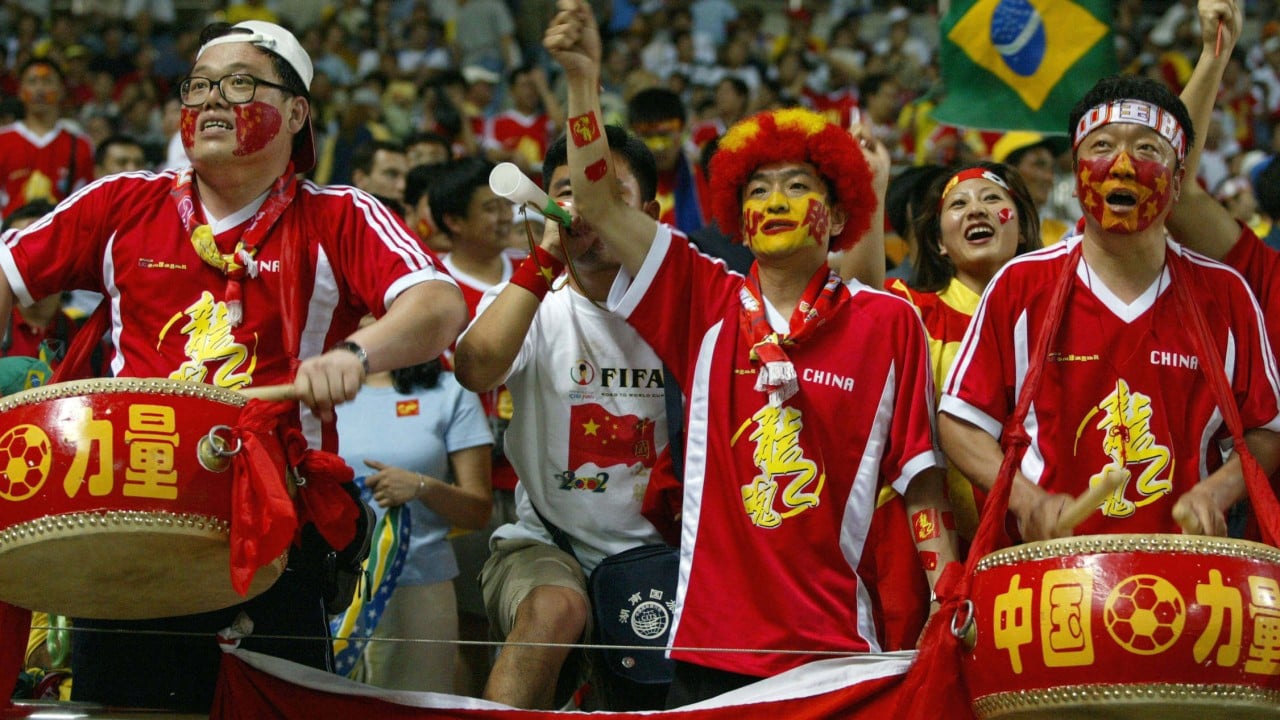
The Shah of Iran, a UK assassination, the Venezuelan petrodollar crisis and Colombia’s creaking infrastructure all indirectly led to Bobby Charlton, Eusebio and Ferenc Puskas glad-handing paying supporters outside stadiums at the 1986 World Cup in Mexico. “In their prime, our team would have beaten every side in that World Cup,” said Jaime Byrom, one of the individuals responsible for a sea change in sports hospitality since his first innovative step into the industry 40 years ago. Byrom’s...
SCMP Best Bets: Bustling City can make the punters happy at Sha Tin
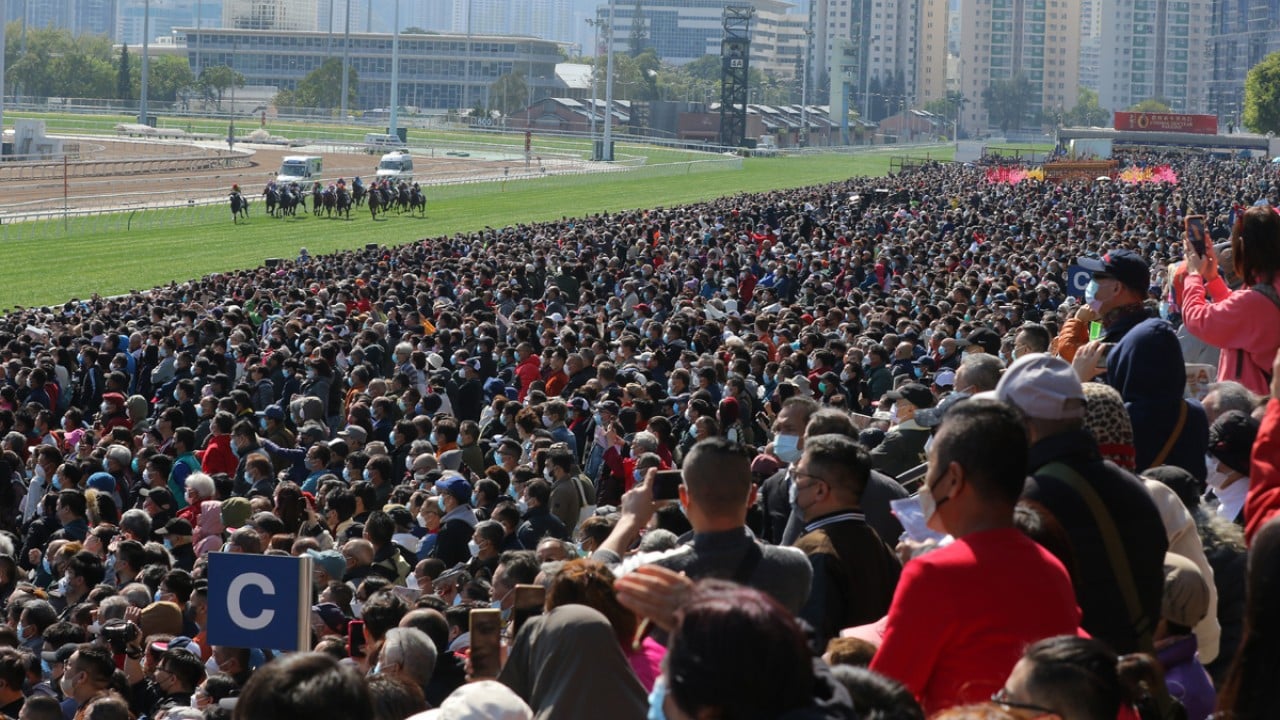
Jay Rooney GIANT LEAP - R7 (4) Only just caught last start and can go one better tonight Owen Goulding DRAGON AIR FORCE - R9 (6) Hugely unlucky not to win last start when checked late on; can gain compensation Paul Lally JOLTIN - R6 (10) Good run last start when stepped up in distance and there is more to come Phillip Woo HAPPY UNIVERSE - R6 (1) Has strong claims after returning a nail-biting third over this trip Trackwork Spy BUSTLING CITY - R8 (4) Fell short in hat-trick bid at skinny...








YOUR NEWS, OUR NETWORK.
Do you have Great News you want to tell the world?
Be it updates about your business or your community, you can make sure that it’s heard by submitting your story to our network reaching hundreds of news sites across 6 verticals.