The Hidden Cost to American Industry
Oct 14, 2026
Fort Myers, Florida Oct 14, 2026 (Issuewire.com) - HEALTHCARE IN THE UNITED STATES
A NEWS SERIES ABOUT HOW WE GOT HERE - AND HOW WE MIGHT FIX IT
ARTICLE 8
The Hidden Cost to American Industry
Healthcare is not only a medical expense. When employers finance coverage, healthcare becomes part of the economic cost of employing American workers.
Imagine two factories selling similar products in the same world market. Both must buy machinery, energy and raw materials. Both must pay skilled workers. Both must invest in technology and quality. But the way each country finances healthcare can place those costs in very different places.
That does not mean foreign manufacturers receive healthcare for free. Their workers and societies pay for healthcare through taxes, social-insurance contributions, premiums and other arrangements.
The important economic question is not whether healthcare is paid for.
It is where the cost appears - and who carries it.
In the United States, employers have long played a major role in financing health insurance for workers and their families. That means healthcare is not confined to the hospital budget. It reaches the payroll department, the bargaining table, the worker's paycheck and potentially the cost structure of American business.
The Price Attached to a Job
Employer-sponsored health insurance is often discussed as though it were separate from wages. Economically, both are forms of employee compensation.
In 2025, KFF's national employer survey found that the average annual premium for employer-sponsored coverage was $9,325 for a single worker and $26,993 for family coverage.
Workers paid an average of $1,440 toward single coverage and $6,850 toward family coverage. Employers financed the remaining premium on average.
For family coverage, that means the employer portion averaged roughly $20,000 a year before considering other possible health-benefit expenses.
The employer is not buying the employee's surgery or becoming the customer receiving medical treatment. As Article 3 explained, the employer is financing coverage.
But financing coverage still costs money.
To a business, health benefits are part of the total cost of employing people even though the employer is not the patient.
Who Really Pays the Employer Contribution?
Calling part of a premium the "employer contribution" can also hide an economic reality.
The check may come from the employer, but businesses must ultimately finance compensation from revenue, productivity and the value created by their workforce.
Economists therefore generally analyze employer-paid benefits as part of total compensation rather than as money appearing from nowhere.
Over time, higher benefit costs can interact with wages, hiring, prices, profits and investment. The precise effect varies by employer, labor market and industry.
This is why the healthcare debate cannot be limited to the question, "How much does the patient pay at the doctor's office?"
A worker may pay part of healthcare through a premium deduction, another part through deductibles and copayments, and another part indirectly through the compensation package offered by an employer.
A Factory Competes With More Than Another Factory
Manufacturing competitiveness is complicated.
American factories compete on productivity, automation, worker skill, energy costs, transportation, taxes, regulation, financing costs, exchange rates, supply chains, product quality, intellectual property and many other factors.
Healthcare should not be blamed for every factory closure, trade deficit or movement of production overseas.
But healthcare belongs on the list of costs worth examining because the United States devotes an unusually large share of its economy to medical care.
As Article 7 showed, OECD comparative data put U.S. healthcare spending at roughly 17 percent of gross domestic product in 2024, far above the OECD average.
When one sector absorbs a very large share of national resources, the effects do not remain inside that sector.
Money spent in one place cannot simultaneously be spent somewhere else.
The Opportunity Cost of Healthcare
Economists call that tradeoff opportunity cost.
Consider an employer facing another large increase in health-benefit costs. The company might absorb the increase. It might raise prices. It might negotiate harder over wages. It might redesign benefits. It might reduce hiring. It might accept lower profits. It might postpone an investment.
Different companies will make different choices.
At the national level, however, the underlying question remains: what else could resources devoted to unusually expensive healthcare have supported?
- Higher wages or other employee compensation.
- New machinery, automation and factory modernization.
- Research, product development and innovation.
- Expansion of domestic production.
- Lower consumer prices or stronger business margins.
- Household saving and spending outside healthcare.
- Public investment or lower pressure on government budgets.
This does not mean healthcare spending is wasted. Healthcare employs millions of people, saves lives, reduces suffering and creates valuable technologies.
The issue is value: how much health and security does the country receive for the resources it commits?
International Competition Changes the Question
Article 7 showed that other democracies finance universal or near-universal healthcare in different ways.
Some rely more heavily on taxation. Some use social-insurance contributions. Some use regulated private insurers. Most use mixtures.
Those systems still impose real economic costs on businesses, workers and taxpayers. A payroll contribution or business tax can affect competitiveness just as an insurance premium can.
So it would be inaccurate to say that foreign manufacturers simply have no healthcare costs.
The better comparison asks four questions:
- How much does the country spend on healthcare overall?
- How much of that cost is connected directly to employment?
- How predictable is the cost for employers and workers?
- What health outcomes and access does the country receive for the money?
Only after answering those questions can we fairly judge whether healthcare financing gives one country's manufacturers an advantage over another's.
Healthcare Can Affect Trade Without Appearing on a Shipping Invoice
When an American manufacturer exports a product, the invoice does not contain a line labeled "employee healthcare."
That does not mean healthcare is economically absent.
Labor compensation, including benefits, is one component of production cost. Production costs influence the prices companies can charge, the investments they can afford and the locations in which production is economically attractive.
Healthcare costs can therefore affect international competitiveness indirectly.
But the direction and size of that effect must be measured rather than assumed. A country with public healthcare may finance it through taxes that also affect employers. A highly productive American factory may overcome higher benefit costs through automation or worker productivity.
This series is not arguing that healthcare alone determines trade.
It is arguing that a country spending far more on healthcare than its competitors should ask whether it is receiving enough additional value to justify the economic burden.
The Cost Reaches Government and Families Too
Employers are only one channel.
Federal and state governments finance Medicare, Medicaid, veterans' care, public employees' benefits, tax preferences and other health-related commitments.
Households pay premiums, payroll taxes, deductibles, copayments, coinsurance and uncovered medical expenses.
Healthcare costs can therefore reach the same family from several directions: as workers, taxpayers, consumers and patients.
This is why America's healthcare problem cannot be solved merely by shifting a bill from one payer to another.
If an employer stops paying a premium but an equivalent cost simply reappears as a tax with no reduction in total national healthcare spending, the country has changed the financing mechanism but has not necessarily made healthcare more efficient.
A successful reform must therefore address both coverage and cost.
Could Healthcare Reform Strengthen Capitalism?
This brings the series to a conclusion that may initially sound contradictory.
Moving essential healthcare toward a broader social guarantee does not necessarily require weakening capitalism.
It could be argued that separating basic healthcare security from individual employers might allow businesses to concentrate more directly on what competitive businesses do best: design, manufacture, innovate, invest, hire and compete.
Whether that would actually reduce total costs depends entirely on how the replacement system is designed. Taxes would still finance care. Doctors and hospitals would still have to be paid. Waste and fraud would still need to be controlled. Government itself would require accountability.
But the question is worth asking.
Why should a manufacturer need expertise in purchasing health insurance in order to build a competitive machine, appliance, vehicle or electronic product?
Why should a worker's access to essential healthcare depend so heavily upon which employer happens to issue the paycheck?
And if other democratic capitalist nations have found different ways to separate healthcare security from individual employment, what parts of those approaches might help American industry compete?
Protect the Market by Knowing Where Markets Work
The first article in this series began with inelastic demand.
A frightened patient cannot always behave like an ordinary consumer. A manufacturer, however, operates in a world where competition can be extraordinarily productive.
That distinction may be the key to the entire series.
Instead of asking whether America should become capitalist or socialist, perhaps we should ask where each economic tool works best.
Competitive capitalism can remain the engine for manufacturing, technology, agriculture, construction, transportation and innovation.
At the same time, society can consider whether essential healthcare should be financed in a way that protects the patient from fear-based bargaining and protects employers from carrying responsibilities unrelated to the products they are trying to make.
Healthcare reform, viewed this way, is not necessarily a retreat from capitalism. It may become part of a strategy for protecting it.
Sources Behind the Numbers
The employer-premium figures in this article come from KFF's 2025 Employer Health Benefits Survey, based on interviews with private and non-federal public employers. The international spending comparison follows OECD Health at a Glance 2025 data. These figures should be updated when the series is prepared for final publication so readers receive the most current comparable information.
NEXT IN THE SERIES
Social-Capitalism: Protecting Healthcare, Capitalism and Democracy - The final article brings the pieces together. Can America guarantee essential healthcare without government owning the entire medical system? Can physicians remain independent? Can private companies continue to innovate? And can changing healthcare financing actually strengthen manufacturing, competition and democracy?
Editor's note: Healthcare is one of many factors affecting wages, manufacturing costs and international competitiveness. This article does not claim that healthcare alone determines trade performance or business location decisions.
Source :Roy J. Meidinger
This article was originally published by IssueWire. Read the original article here.

China fans left stunned after Portland Trail Blazers demote Yang Hansen to NBA G League
The Portland Trail Blazers’ decision to assign centre Yang Hansen to their NBA G League affiliate has caught many Chinese basketball fans off guard, sparking a flurry of online debate over his current standing and future in the league. The Trail Blazers announced on social media early Thursday morning that the 21-year-old had been assigned to the Rip City Remix. The move came just three games into Portland’s 2026-27 NBA season as Yang continued to struggle to enter the regular rotation or secure...

The Hong Kong Racing Postscript: who’s hot, who’s not and the best win and ride of October
October was a busy month in Hong Kong racing with nine meetings, a trio of Group races and a host of jockeys and trainers making big statements. The SCMP analyses the jockeys and trainers who had a month to remember or one to forget, as well as the most outstanding victory and winning ride. Who’s hot? Zac Purton, apprentice Nichola Yuen Hang-yiu and Jerry Chau Chun-lok were the stars of the show in October, with each reaching double figures for wins. Purton ramped up his march towards a 10th...

Pierre Ng forced to go to plan B with jockey bookings as he assembles Happy Valley squad
Pierre Ng Pang-chi has been forced to go to plan B for Happy Valley’s Sunday meeting, as two Nichola Yuen Hang-yiu-ridden last-start winners have new jockeys with the in-form claimer in hot demand. Ng and Yuen have struck up a remarkable partnership since her debut in April, combining for 11 winners from 30 runners at a phenomenal strike rate of 37 per cent. This season alone, seven of Ng’s 15 winners have been ridden by Yuen, including victories on her sole rides for the stable at the last two...
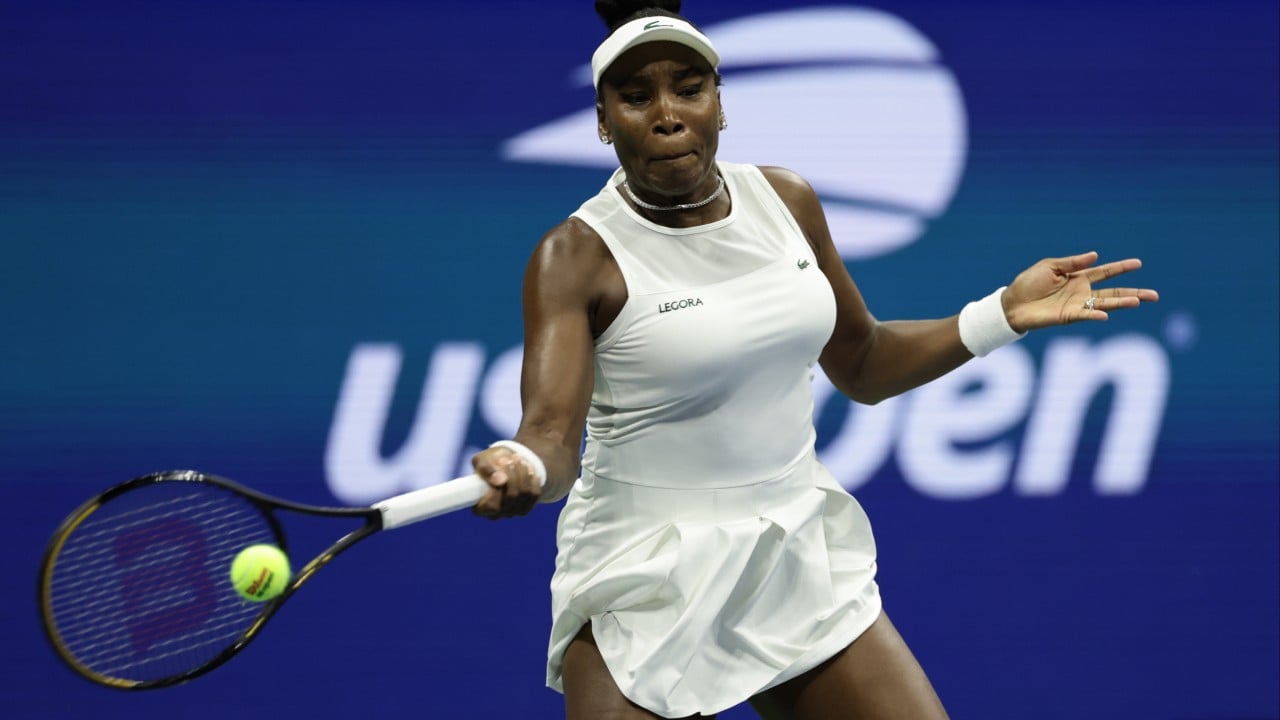
Venus Williams vows to quit on own terms, but could Hong Kong be end of American’s road?
Venus Williams has vowed not to be railroaded into retirement, but the American superstar raised the possibility that next week’s Prudential Hong Kong Tennis Open could close the book on her extraordinary career. A 23-time grand slam champion, Williams suffered a 16th straight defeat when she was comfortably beaten by 18-year-old Lilli Tagger in the opening round of the Guangzhou Open on Tuesday. Williams has been winless in singles since marking her return from a 16-month lay-off with a victory...

Nichola Yuen dominates Sha Tin dirt meeting with treble as Britney Wong and Jimmy Ting break through
Apprentice Nichola Yuen Hang-yiu strengthened her grip on second in the jockeys’ championship with a treble as Britney Wong Po-ni and Jimmy Ting Koon-ho celebrated breakthrough wins at Sha Tin on Wednesday night. Continuing a dream start to the season, Yuen boosted her tally to 16 wins – 10 behind nine-time Hong Kong champion Zac Purton – with victories aboard Macanese Master, Yoda’s Choice and Giant Leap. “I’m very happy with all the opportunities I’m getting,” Yuen, 26, said. “I’m getting good...
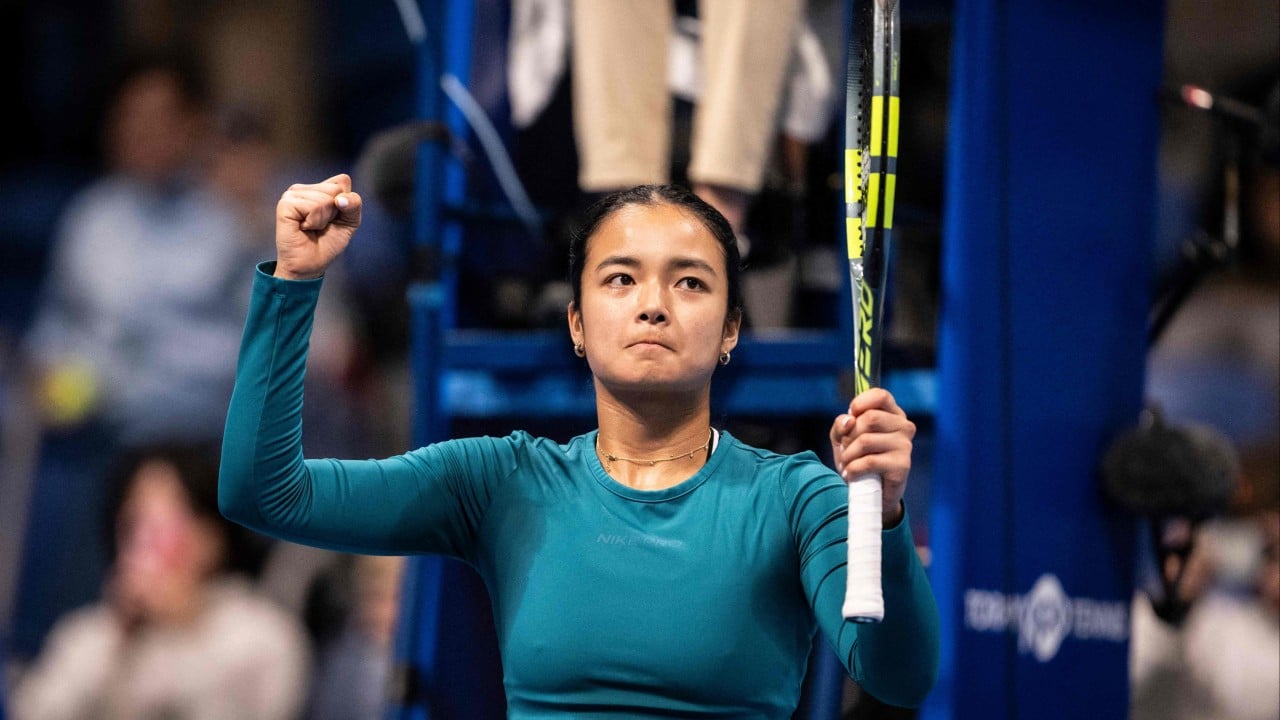
Philippines’ Alexandra Eala recovers to move into Pan Pacific Open quarter-finals in Tokyo
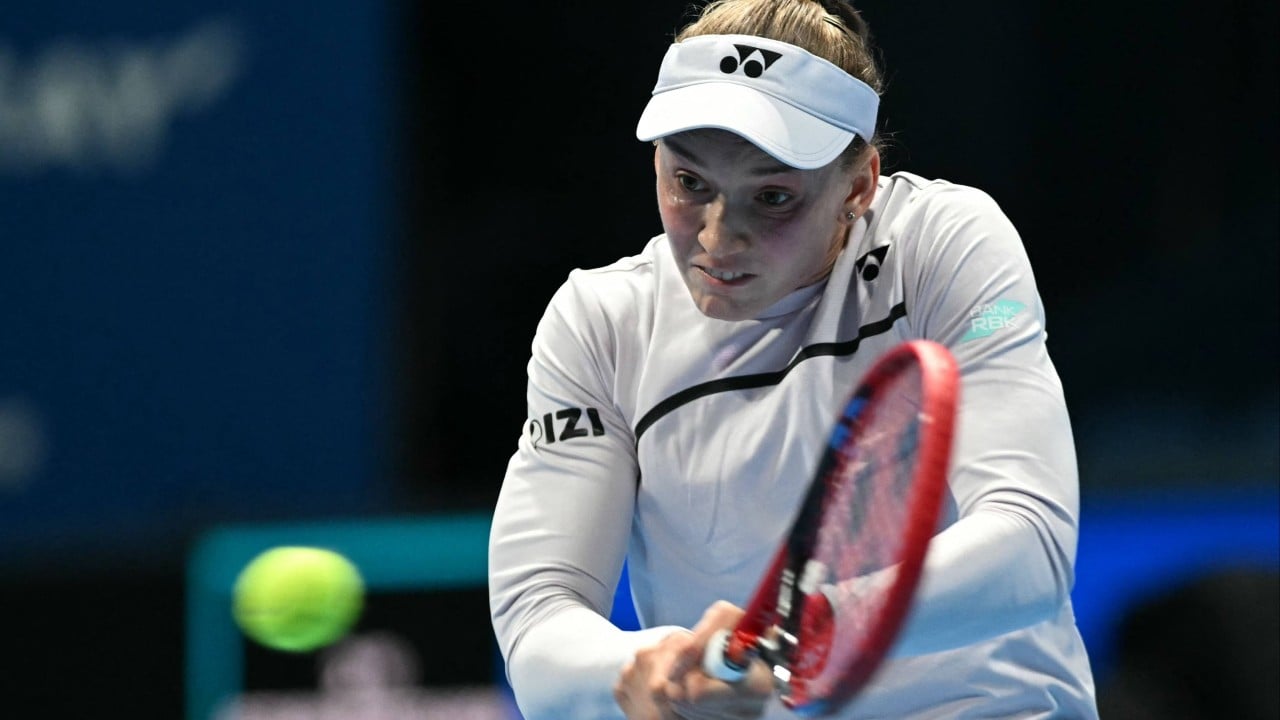
Philippine sensation Alexandra Eala came from behind to beat Talia Gibson 4-6, 6-2, 6-0 in Tokyo on Wednesday and said “it took a lot to turn that match around”. The world No 19’s recent run of early tournament exits looked in danger of continuing when Australia’s Gibson, ranked 38, took the first set at the Pan Pacific Open. But Eala dug in and evened the match before hitting top gear in a dominating third set. The 21-year-old said the turnaround had been “a gradual increase of level”. “Maybe...

Kimi Antonelli set to end Italy’s puzzlingly long 73-year wait for Formula 1 champion
Kimi Antonelli is on the verge of becoming Formula 1’s youngest-ever champion, and the first Italian to win the title since Alberto Ascari in 1953. For a country full of passionate racing fans, the 73-year wait for an Italian champ is puzzling. Over decades without a title contender to cheer, Italy’s legions of passionate “tifosi” fans have worn red to support Ferrari as a team, rather than individual Italian drivers. Now the 20-year-old Antonelli, reportedly rejected by Ferrari as a child...

China’s top swimmers enjoy record-breaking performances at national championships
Chinese swimmers showcased their strength in depth with record-breaking performances by veterans and rising stars at the national championships in Beijing. As of Tuesday, swimmers had broken one world, six Asian and multiple national records. Zhang Yufei and Zhang Zhanshuo set Asian short-course records in the women’s 100m butterfly and men’s 800m freestyle, clocking 54.87 seconds and seven minutes 28.61 seconds respectively to claim gold. The national event is the official selection trial for...

Runners swap streets for shopping malls as haze chokes Singapore
The pounding of running shoes echoes through a Singapore shopping centre as fitness enthusiasts desperate to exercise take refuge from choking haze. Smoke from wildfires in neighbouring Indonesia has sent air quality in the city state plummeting to its worst levels in more than a decade in recent weeks, cancelling outdoor activities. Those seeking exercise, including runners training for international events, have found an unconventional alternative: air-conditioned shopping malls. On Saturday,...

Ryan Moore, James McDonald and Zac Purton headline stellar International Jockeys’ Championship line-up
International stars Ryan Moore, James McDonald and Joao Moreira, plus nine-time Hong Kong champion Zac Purton, headline a stellar line-up for December’s Longines International Jockeys’ Championship (IJC) at Happy Valley. The current top five in the Longines World’s Best Jockey standings – Moore, McDonald, William Buick, Mickael Barzalona and Purton – will contest the world’s most prestigious jockey challenge, while rising British star Saffie Osborne will make her IJC debut. Moreira, the winner...
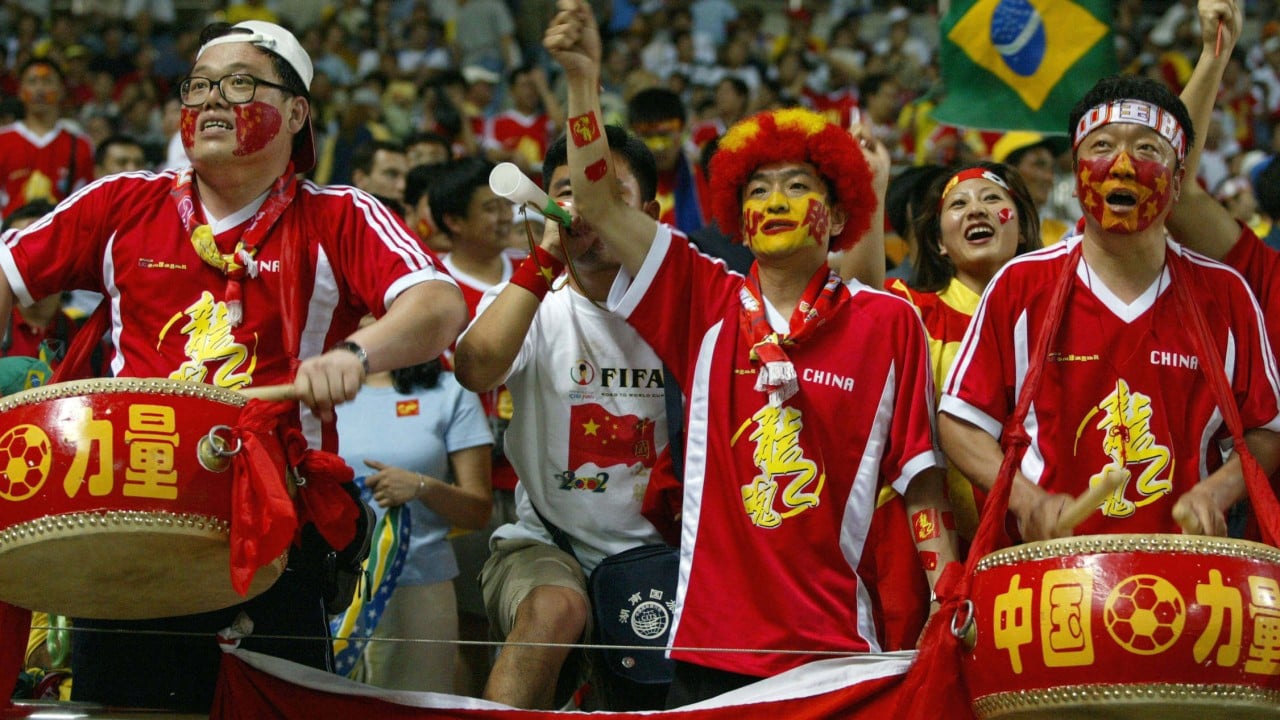
The Shah of Iran, Venezuela and how Charlton, Eusebio, Puskas all got to 1986 World Cup
The Shah of Iran, a UK assassination, the Venezuelan petrodollar crisis and Colombia’s creaking infrastructure all indirectly led to Bobby Charlton, Eusebio and Ferenc Puskas glad-handing paying supporters outside stadiums at the 1986 World Cup in Mexico. “In their prime, our team would have beaten every side in that World Cup,” said Jaime Byrom, one of the individuals responsible for a sea change in sports hospitality since his first innovative step into the industry 40 years ago. Byrom’s...
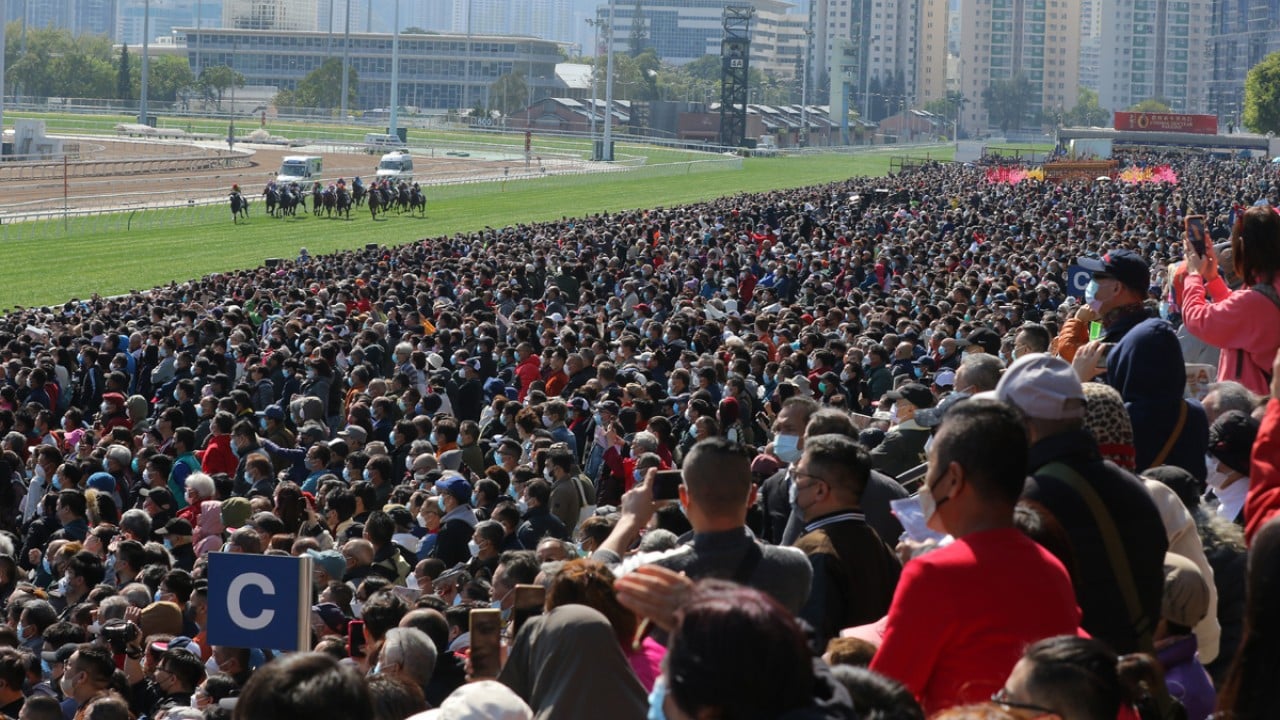
SCMP Best Bets: Bustling City can make the punters happy at Sha Tin
Jay Rooney GIANT LEAP - R7 (4) Only just caught last start and can go one better tonight Owen Goulding DRAGON AIR FORCE - R9 (6) Hugely unlucky not to win last start when checked late on; can gain compensation Paul Lally JOLTIN - R6 (10) Good run last start when stepped up in distance and there is more to come Phillip Woo HAPPY UNIVERSE - R6 (1) Has strong claims after returning a nail-biting third over this trip Trackwork Spy BUSTLING CITY - R8 (4) Fell short in hat-trick bid at skinny...








YOUR NEWS, OUR NETWORK.
Do you have Great News you want to tell the world?
Be it updates about your business or your community, you can make sure that it’s heard by submitting your story to our network reaching hundreds of news sites across 6 verticals.