Shanghai Tongjie as a Global Leading Containerized Mobile Emergency SWRO System from China: Energy Recovery
Sep 18, 2026
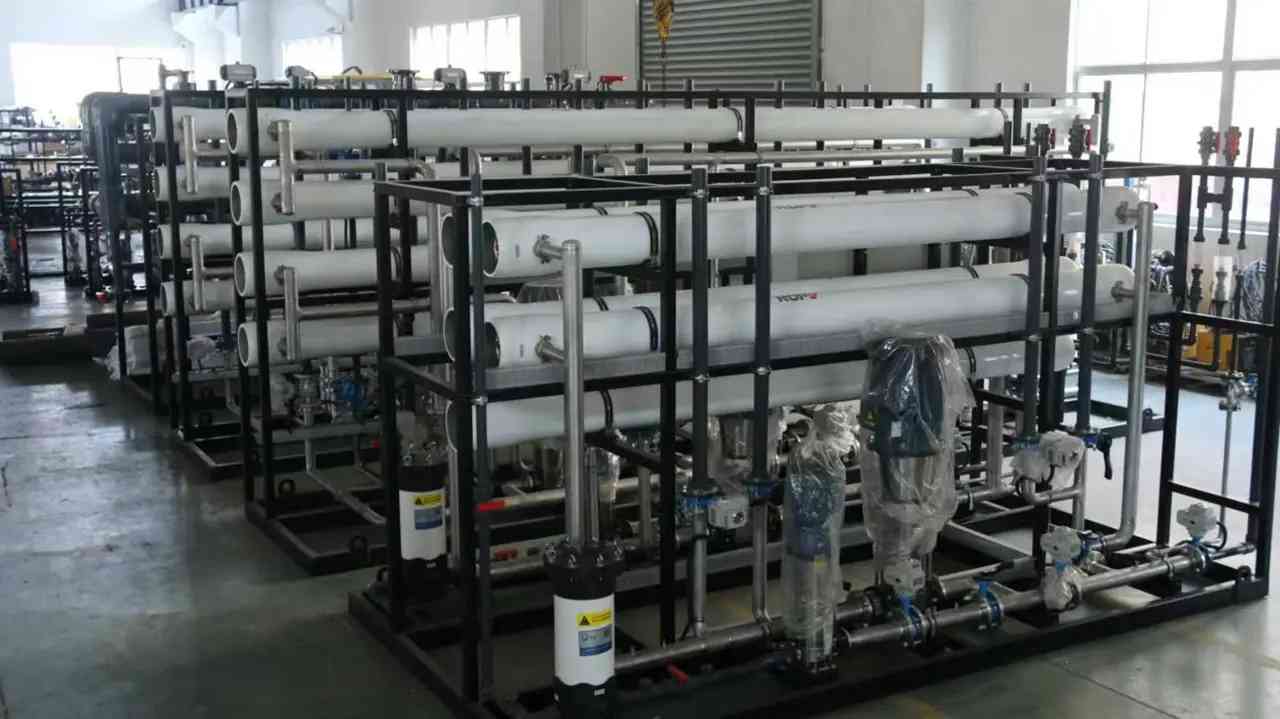
Shanghai, China Sep 18, 2026 (Issuewire.com) - Operating reverse osmosis desalination in decentralized, mobile, or emergency settings is heavily constrained by electrical power availability. Sourcing a containerized mobile emergency SWRO system requires engineering teams to balance initial equipment capital against ongoing generator fuel consumption. As demonstrated in global deployments by Shanghai Tongjie, integrating high-efficiency energy recovery devices fundamentally reshapes the operational economics of temporary water production by substantially reducing specific power consumption.
For procurement engineers and fleet operators, energy efficiency in mobile water treatment is not merely an environmental consideration. In off-grid camps, disaster zones, and maritime locations powered by diesel generators, specific energy consumption (kWh/m³) directly determines generator sizing, fuel replenishment logistics, and total cost of water production.
Energy Recovery Changes the Lifecycle Economics of Mobile SWRO
Reverse osmosis separation of seawater requires overcoming substantial natural osmotic pressure. Standard oceanic feedwater with total dissolved solids (TDS) between 35,000 and 40,000 mg/L demands operating pressures between 55 and 70 bar to force pure water molecules through semi-permeable polyamide membranes. Supplying this hydraulic pressure requires high-pressure positive displacement or centrifugal pumps driven by heavy-duty electric motors.
In conventional reverse osmosis systems lacking energy recovery, electrical power accounts for 50% to 70% of ongoing operational expenditure (OPEX). In permanent municipal installations connected to low-cost utility grids, this operational cost is amortized over decades. In contrast, mobile and emergency containerized units frequently operate from mobile diesel generators or constrained island microgrids where electricity generation costs three to five times standard grid rates.
Integrating energy recovery devices fundamentally alters this economic equation. By transferring mechanical energy from the reject brine stream directly into incoming feedwater, an ERD reduces high-pressure pump motor load by 40% to 50%. This power reduction lowers specific energy consumption from approximately 6.5-8.0 kWh/m³ down to 2.8-3.8 kWh/m³, directly shrinking the required generator capacity and daily diesel fuel consumption.
Why Seawater RO Contains Recoverable Pressure Energy
The thermodynamic necessity of energy recovery arises directly from the recovery limits of reverse osmosis membranes. Unlike thermal distillation processes that evaporate water, reverse osmosis concentrates dissolved salts in a pressurized reject stream known as brine or concentrate.
Standard single-pass SWRO systems typically operate at a volumetric recovery rate between 40% and 45%. This means that for every 100 cubic meters of seawater pressurized to 65 bar by the main pump, only 40 to 45 cubic meters permeate through the membrane barrier as fresh potable water. The remaining 55 to 60 cubic meters exit the membrane pressure vessels as concentrated brine, still carrying approximately 55 to 62 bar of hydrostatic pressure.
If this pressurized brine stream is discharged through a standard throttling valve, its hydraulic energy is completely dissipated as waste heat, acoustic noise, and pipe vibration. Energy recovery devices capture this pressurized fluid before depressurization, transferring its hydraulic work back into the feed stream before discharge.
Modern energy recovery technologies fall into two primary mechanical categories:
- Isobaric Pressure Exchangers (PX): Utilize positive-displacement ceramic rotors to achieve direct pressure transfer between high-pressure brine and low-pressure feedwater, delivering hydraulic energy transfer efficiencies up to 90% to 95%.
- Centrifugal Turbochargers: Utilize a brine-driven turbine wheel mounted on a single shaft with an auxiliary impeller, delivering hydraulic efficiencies between 65% and 80% without requiring an auxiliary high-pressure booster pump.
Which Project Variables Determine Whether Energy Recovery Adds Value
While energy recovery offers compelling thermodynamic benefits, integrating an ERD introduces additional capital cost, piping complexity, and weight inside a compact container. Sourcing teams must evaluate project-specific variables to determine whether energy recovery is economically justified for their deployment profile.
System capacity serves as the initial screening threshold. In small mobile units producing less than 50 to 100 cubic meters per day (t/d), the capital cost of an isobaric pressure exchanger and its booster pump represents a substantial percentage of total skid cost. For intermittent, seasonal, or rapid-response disaster units operating fewer than 1,000 hours per year, omitting the ERD simplifies the skid layout, reduces initial CAPEX, and provides maximum mechanical simplicity.
Conversely, for systems producing greater than 100 cubic meters per day, or units designed for continuous baseload supply (such as coastal work camps and island resorts operating 16 to 24 hours daily), energy savings rapidly offset initial device costs. Financial payback typically ranges between 18 and 36 months, depending heavily on local fuel or electricity prices.
Shanghai Tongjie evaluates equipment options across established international brands and qualified domestic Chinese energy recovery units, providing verified performance modeling under site-specific operating temperatures and salinity conditions.
Compare Pumping, Energy Recovery, and Mobile-System Operating Costs as One System
Optimizing lifecycle costs requires evaluating the high-pressure pump, the energy recovery device, and the external power supply as a single integrated thermodynamic system.
When an ERD is integrated into a mobile SWRO container, the primary high-pressure pump no longer needs to deliver 100% of feed flow at full operating pressure. Instead, the main pump is sized to deliver only the 40% to 45% permeate portion of the flow at 65 bar. The remaining 55% to 60% of the feed stream passes through the energy recovery device, pressurized directly by returning brine, with a small auxiliary booster pump supplying only the differential pressure head (2 to 5 bar) required to overcome membrane resistance.
This systemic redesign produces cascading operational benefits for mobile deployments:
- Downsized Main Pump & Motor: Smaller high-pressure pumps lower skid weight, reduce electrical panel footprint, and reduce the physical dimensions of the primary drive train.
- Reduced Generator kVA Rating: Lowering overall electrical draw allows the site to utilize a smaller, more fuel-efficient mobile generator, lowering capital rental/purchase costs and reducing transportation weight.
- Reduced Fuel Burn & Logistics: For remote operations dependent on trucked or barged diesel fuel, cutting specific fuel consumption per cubic meter of water significantly simplifies the fuel supply chain and shields the operation from volatile fuel price spikes.
SWRO Energy-Recovery FAQ
Evaluating energy recovery requires balancing equipment capital costs, daily runtime, and regional energy expenditures.
How Much Energy Can an ERD Save in a Containerized SWRO Plant?
An isobaric energy recovery device typically reduces the specific energy consumption of seawater desalination from 6.5-8.0 kWh/m³ down to 2.8-3.8 kWh/m³, representing an energy reduction of 40% to 50%.
At What System Capacity Does Energy Recovery Become Economically Justified?
Energy recovery is standard practice and strongly recommended for systems with capacities exceeding 100 m³/day operating continuously. For units under 50 m³/day operating intermittently, the capital savings of omitting the ERD may outweigh the operating cost benefit.
What Is the Difference Between Isobaric and Centrifugal ERDs?
Isobaric devices (PX) offer the highest energy transfer efficiency (up to 95%) but require an auxiliary booster pump. Centrifugal turbochargers offer moderate efficiency (65-80%) in a simpler, single-shaft format without requiring an auxiliary pump.
Does Energy Recovery Add Significant Maintenance Complexity?
High-purity alumina ceramic rotors in modern isobaric devices are lubricated hydrodynamically by the process water, offering operating lifespans exceeding 5 to 10 years when protected by proper 5-micron pre-filtration.
How Does ERD Integration Affect Generator Sizing in Mobile Units?
By cutting motor kilowatt requirements in half, energy recovery allows operators to pair the mobile desalination container with a significantly smaller diesel generator, lowering fuel burn and generator transport footprint.
Request a Project-Specific CAPEX and OPEX Comparison
Determining the optimal equipment configuration requires modeling capital amortizations against verified site operating costs. Grounding equipment selection in verified operational hours, local power tariffs, and feedwater salinity ensures that the selected plant delivers the lowest net cost per ton of freshwater.
Provide target daily water volume, operating hours per day, local power cost (or generator fuel price), and raw seawater TDS to the Shanghai Tongjie process modeling engineers to receive a comparative simulation of capital cost, specific energy consumption, and projected payback schedules.
Media Contact
Shanghai Tongjie Environmental Protection Technology Co., Ltd.
Source :Shanghai Tongjie Environmental Protection Technology Co., Ltd.
This article was originally published by IssueWire. Read the original article here.

Philippines seek WTA exemption as Alexandra Eala skips China Open for Asian Games
The Philippines Tennis Association (Philta) has filed a request with the WTA on behalf of Alexandra Eala, requesting an exemption from the mandatory China Open so that the world No 18 can represent her country at the Asian Games. Eala, who has become a fan favourite with wins over some of the biggest names on the circuit including Iga Swiatek and Coco Gauff, is the highest-ranked player in the women’s singles draw at the Asian Games, which begin on Saturday and conclude on October...
Hong Kong tennis bosses hail Victoria Park revamp plans, eye WTA, ATP 500 tournaments
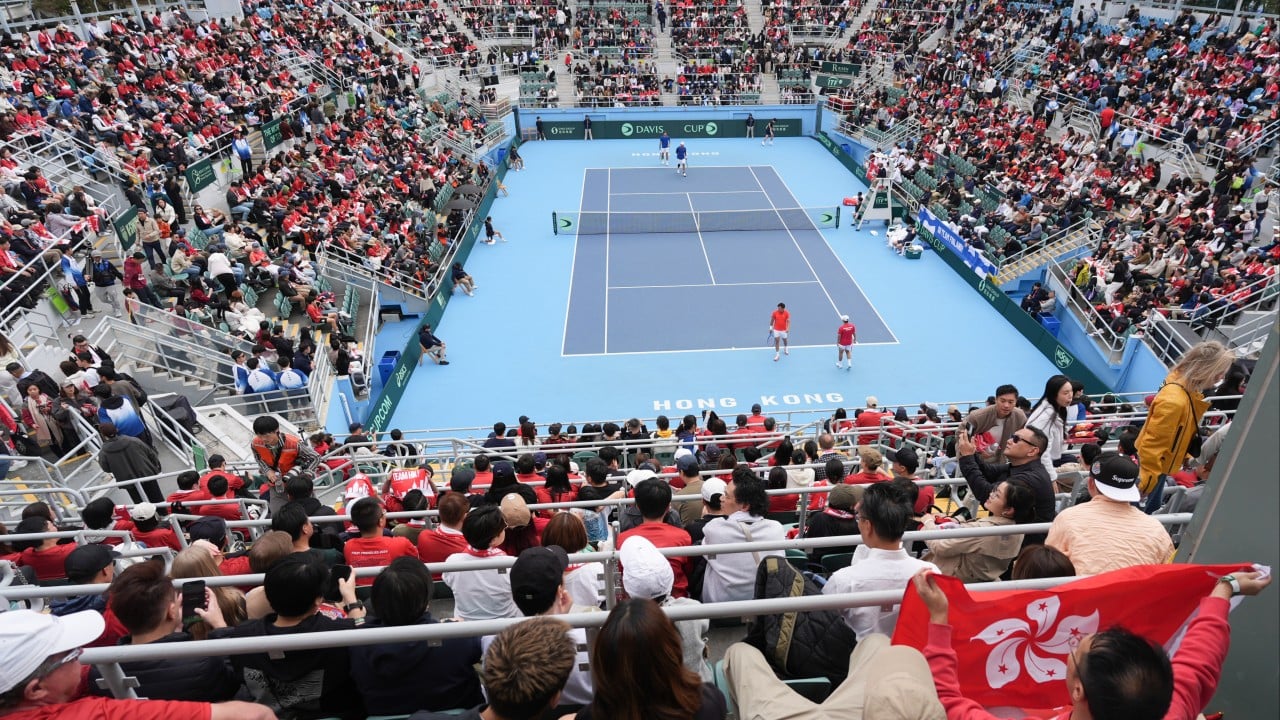
Hong Kong’s decades-old tennis facilities at Victoria Park will be redeveloped, the city’s leader said on Wednesday, a move that could open the way to holding bigger tournaments in the future. Speaking during his annual Policy Address, Chief Executive John Lee Ka-chiu said the plan was “to strengthen the promotion of ‘sports and mega-events’.” At the moment, Hong Kong holds the rights to stage a WTA and an ATP tournament, both at the 250 level. The first of those is the Prudential Hong Kong Open...

X Games League to hold first winter draft, with Eileen Gu expected to be top pick
The MoonPay X Games League will hold its inaugural winter draft this week, betting that a team-based format and closer ties with the Olympic movement can build on strong audience growth for action sports, CEO Jeremy Bloom said. Eileen Gu, the most decorated freestyle skier in Olympic history with three golds and three silvers, is expected to be selected first overall. The draft follows the debut of the X Games Summer League, which featured teams representing Los Angeles, New York, Sao Paulo...

Sunday’s Sha Tin races cancelled due to state funeral for ex-Hong Kong leader Tung Chee-hwa
Sunday’s Sha Tin meeting has been cancelled because of the state funeral for Hong Kong’s first chief executive, Tung Chee-hwa. In a brief statement on Wednesday, the Hong Kong Jockey Club said the 10-race card would not go ahead as a mark of respect for Tung, who was also the vice-chairman of the National Committee of the Chinese People’s Political Consultative Conference. Tung’s vigil will be held on Saturday, with a public memorial and funeral set to take place on Sunday. “In deference to the...
Top jockey Hugh Bowman weighs up surgery v cortisone injection to repair hip labral tear
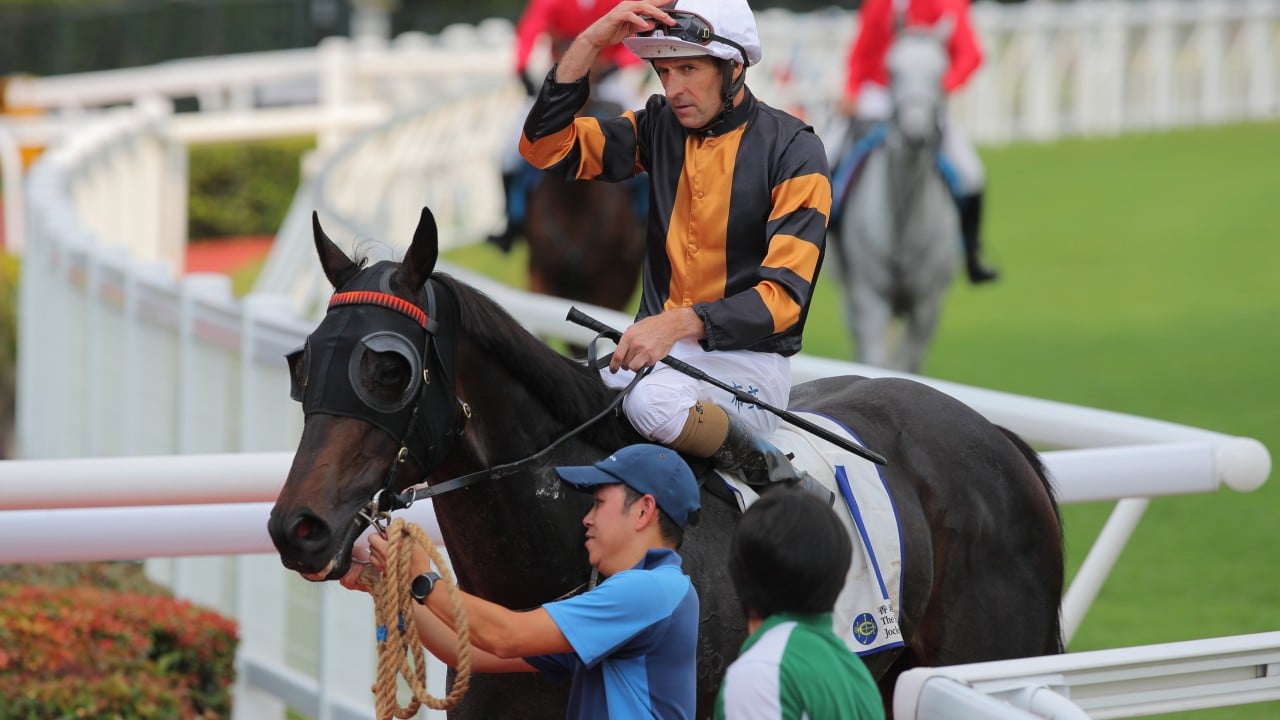
Hugh Bowman is weighing up whether to undergo surgery or keep his Hong Kong International Races (HKIR) hopes alive with a short-term solution, after scans revealed the top Australian jockey has a labral tear in his right hip. The 46-year-old faces at least four months out of the saddle if he opts for surgery, but a cortisone injection would only force him out of action for a few weeks. Bowman rode at the season opener at Sha Tin on September 6, guiding Joyful Joy to victory, but was forced out...

For Phurba Tenjing Sherpa, climbing Everest now a way to help others ‘fulfil their dreams’
Mount Everest, known to all, understood by few – including someone who has been up and down the treacherous peak almost 20 times. More than 7,500 individuals have reached the top of the highest mountain on Earth since it was first conquered by Edmund Hillary and Tenzing Norgay on May 29, 1953, and there have been more than 15,780 successful ascents, with climbers and guides returning for repeated attempts. It has also claimed the lives of at least 346 people, which is the number since records...

SCMP Best Bets: Live Wire can shock his rivals at Happy Valley
Jay Rooney BUNTA BABY - R7 (5) Won three C&D races last term and gets an ideal set-up to swoop late here Owen Goulding GIANT LEAP - R4 (4) Lurks on a dangerous mark, has a 10lb claimer up and trialled well leading in Paul Lally LIVE WIRE - R4 (3) Got off the mark to end last season and has trialled well ahead of this run Phillip Woo DAN ATTACK - R2 (8) Has solid Happy Valley 1,200m form and does go well fresh Trackwork Spy LIVE WIRE - R4 (3) Game win to break his maiden on final start of...

Celebrated Everest guide Phurba Tenjing Sherpa fears way of life under threat
Phurba Tenjing Sherpa has climbed Mount Everest 18 times over the years but fears he may now be a dying breed, with climate change one day making it unscalable and societal change leaving fewer willing to risk its dangers. The 37-year-old, who runs his own business guiding people up and down Earth’s highest peak, said one of the biggest challenge his industry faced was the fact “the Sherpa community is no longer climbing”. While the veteran guide said he had never been to school, he believed the...

From barefoot hockey to Asian Games, India’s Lalremsiami Hmarzote chases golden dream
When an 11-year-old Lalremsiami Hmarzote told her parents she wanted to leave home to take up a place at one of India’s top hockey academies, she first had to explain to them what the sport was. Less than a decade later, Lalremsiami would become the first female Olympian and the first Asian Games medallist from the northeastern state of Mizoram. Lalremsiami, who fell in love with the sport playing barefoot on dirt pitches in the Himalayan town of Kolasib, is now India’s offensive linchpin as...
SCMP Best Bets: Live Wire can shock his rivals at Happy Valley
Jay Rooney BUNTA BABY - R7 (5) Won three C&D races last term and gets an ideal set-up to swoop late here Owen Goulding GIANT LEAP - R4 (4) Lurks on a dangerous mark, has a 10lb claimer up and trialled well leading in Paul Lally LIVE WIRE - R4 (3) Got off the mark to end last season and has trialled well ahead of this run Phillip Woo DAN ATTACK - R2 (8) Has solid Happy Valley 1,200m form and does go well fresh Trackwork Spy LIVE WIRE - R4 (3) Game win to break his maiden on final start of...
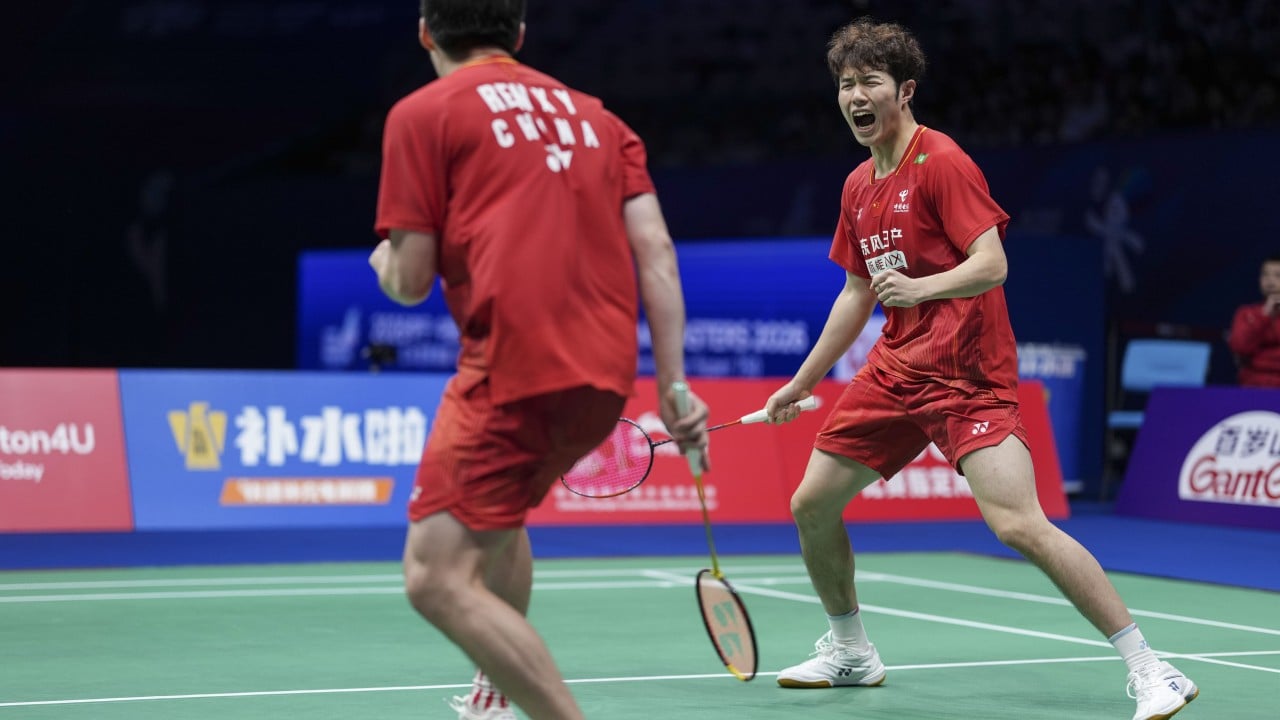
China make late change as they target 7 badminton gold medals at Asian Games
The Chinese Badminton Association has announced, just four days before the start of the Asian Games, that men’s doubles player Chen Boyang had withdrawn because of illness, with He Jiting named as his replacement alongside Liu Yi. On Monday, the association revealed that Chen had suffered a sudden illness. Following consultations between national team doctors and specialists from several hospitals, medical experts confirmed his condition would prevent him from competing. “To protect the...

Who wins at Happy Valley? Bunta Baby a brilliant chance first up with Purton on
Wednesday’s eight-race card at Happy Valley shapes as another even night of racing at the city circuit, with the Class Two Shek O Handicap (1,650m) the highlight. Jay Rooney is in the hot seat to provide an extended rundown of his selections. Race 1 – Class Five Hoi Mei Handicap (1,000m) Me Tsui Yu-sak produced Lucy In The Sky to win on the seven-day backup at Sha Tin and can do the same with Macanese Master, who drops back to his preferred trip after a solid fourth over 1,200m last week. Race...







YOUR NEWS, OUR NETWORK.
Do you have Great News you want to tell the world?
Be it updates about your business or your community, you can make sure that it’s heard by submitting your story to our network reaching hundreds of news sites across 6 verticals.